Friday, February 25, 2011

PLANTS

Plants are living organisms belonging to the kingdom Plantae.
They include familiar organisms such as trees, herbs, bushes, grasses, vines, ferns, mosses, and green algae.
The scientific study of plants, known as botany

Green plants absorb light energy using chlorophyll in their leaves.
They use it to react carbon dioxide with water to make a sugar called glucose.
The glucose is used in respiration, or converted into starch and stored.
Oxygen is produced as a by-product.
This process is called photosynthesis.
Temperature, carbon dioxide concentration and light intensity are factors that can limit the rate of photosynthesis.
Plants also need mineral ions, including nitrate and magnesium, for healthy growth. They suffer from poor growth in conditions where mineral ions are deficient.

Photosynthesis

Photosynthesis is the chemical change which happens in the leaves of green plants.
It is the first step towards making food - not just for plants but ultimately every animal on the planet.
During this reaction, carbon dioxide and water are converted into glucose and oxygen.
The reaction requires light energy, which is absorbed by a green substance called chlorophyll.
Photosynthesis takes place in leaf cells. These contain chloroplasts, which are tiny objects containing chlorophyll.

Here is the equation for photosynthesis:


 Plants absorb water through their roots, and carbon dioxide through their leaves. Some glucose is used for respiration, while some is converted into insoluble starch for storage. The stored starch can later be turned back into glucose and used in respiration. Oxygen is released as a by-product of photosynthesis.

Factors limiting photosynthesis

  1. Light intensity
  2. Carbon dioxide concentration and 
  3. Temperature.
  • Without enough light, a plant cannot photosynthesise very quickly, even if there is plenty of water and carbon dioxide. Increasing the light intensity will boost the speed of photosynthesis. 
  • Photosynthesis is limited by the concentration of carbon dioxide in the air. Even if there is plenty of light, a plant cannot photosynthesise if there is insufficient carbon dioxide.
  • If it gets too cold, the rate of photosynthesis will decrease. Plants cannot photosynthesise if it gets too hot.

    Maximising growth

    Farmers can use their knowledge of these limiting factors to increase crop growth in greenhouses. They may use artificial light so that photosynthesis can continue beyond daylight hours, or in a higher-than-normal light intensity. The use of paraffin lamps inside a greenhouse increases the rate of photosynthesis because the burning paraffin produces carbon dioxide, and heat too.

    Plants and minerals

    Plants need to take in a number of elements to stay alive. The most important are:
  • carbon
  • hydrogen
  • oxygen
Plants get hydrogen and oxygen from water in the soil, and carbon and oxygen from carbon dioxide and oxygen in the atmosphere. Water and carbon dioxide are used to synthesise food during photosynthesis. Oxygen is used to release energy from food during respiration.
In addition to these three elements, plants need a number of minerals for healthy growth. These are absorbed through the roots as mineral ions dissolved in the soil water. Two important mineral ions needed by plants are:
  • nitrate - for making amino acids, which are needed to make proteins
  • magnesium - for making chlorophyll
If a plant does not get enough minerals, its growth will be poor. It will suffer from deficiency symptoms:
  • deficient in nitrate - it will suffer from stunted growth
  • deficient in magnesium - it's leaves will turn yellow
A tomato plant stunted as a result of mineral deficiencyThe tomato plant on the left is healthy, the one on the right is growing in conditions where mineral ions are deficient


SOURCE
  1. http://en.wikipedia.org/wiki/Plant
  2. http://www.bbc.co.uk/schools/gcsebitesize/scien/add_aqa/plants/plants1.shtml

Saturday, February 12, 2011

Mixtures & Compounds


A mixture occurs when you combine matter in such a way where the components can be separated again.


 A compound results from a chemical reaction between components, forming a new substance.


For example, you can combine iron filings with sulfur to make a mixture. 

All it takes is a magnet to separate the iron from the sulfur.


On the other hand, if you heat the  iron and sulfur you form iron sulfide which is a compound.


Here is How 

First form a mixture - Stir some iron filings and sulfur to form a powder. You have just taken two elements and combined them to form a mixture. You can separate the components of the mixture by stirring the powder with a magnet  - iron will stick to the magnet -


If you heat the mixture over a Bunsen burner, hot plate or stove, the mixture will start to glow. The elements will react chemically to form iron sulfide which is a compound. Careful! Unlike the mixture, the formation of a compounds cannot be undone so easily

     What you Need
    • iron filings 
    • sulfur powder
    • magnet
    • test tube or beaker
    • Bunsen burner or hot plate or stove

     A compound is a material that is made up two or more elements chemically joined together.
    For example , water is a compound made up of the elements hydrogen  (H) and oxygen (O). 


    A compound such as water has particles called molecules.

    Water
    • We can represent a water molecule by writing a chemical formula: H2O.
    • This tells us that a molecule of water contains two atoms of hydrogen joined to one atom of oxygen.
    • Water is made up of many identical water molecules. 
    • Water is a liquid, so the molecules are close together.

    Carbon dioxide
    •  Chemical formula: CO2.
    •  one carbon atom joined to two oxygen atoms make a molecule of  carbon dioxide
    • Carbon dioxide is a gas, so the molecules are further apart than in water

    Sodium chloride (common salt)
    • Formula - NaCl
    • There is one sodium particle for every chlorine particle
    • NaCl is a solid, the sodium and chlorine particles in it are close together with strong forces between them

    The cards below show information about some materials. Some of them are elements and some are compounds.


    Signs of a chemical reaction


        Friday, February 4, 2011

        ATOMS AND ELEMENTS


         Before starting this unit, you should already be familiar with these ideas from earlier work.
        • Matter is all the material in the Universe. Everything  we know rocks, air,water, plants, animals andeven humans is made of matter. Matter can  exst in three states as a solid, as a liquid and a gas.
           
        • If we cannot see and touch something in science, we can use a model to help show us how it works. What model have you used to represent circuits?
        • The particle model suggests that all matter is made up of particles. How are the particles arranged in a solids, liquids and gases?
        • Matter sometimes changes state from solid to liquid or liquid to gas and back again. Boiling is one change of state. List some others.
        • All matter is made up of  tiny particles called atoms.
          material that is made of only one type of atom is called an element.

           Elements are found naturally on Earth and in space although some have been created in laboratories in recent times. 
        • The elements were not all discovered at once, and some are very recent discoveries.


        ATOMS
        All matter is composed of atoms.
        Atoms are the smallest pieces of a substance that can exist.
        Atoms are very, very tiny. You cannot see atoms, not even with a microscope.
        Scientist have done many experiments to find out about atoms.
        They use the results of their experiments to develop theories or models to help us understand what atoms are like and how the behave.
        At the centre of the atom there is a core called the nucleus .

        The nucleus is made up of sub-atomic atoms (smaller than atoms)  called protons and neutrons.
        All around the core is an area of spinning electrons.
        They remain in place because  they are attracted to the opposite charge of the protons and the neutrons.
        The protons have a positive charge and neutrons have no electric charge
        Hydrogen atoms are the only atoms without neutrons
        A normal atom has the same number of protons as electrons.
        The atomic number of an atom tell you how many proton it has.
                 Atomic             Number of          Number of
                Number     =     Protons      =      Electrons
         
        Electrons are much smaller than protons, they weigh almost nothiing.
        The atomic mass of an atom depends on the number of protons and neutrons in the nucleus
        Carbon has an atomic mass of twelve.
        The number of protons and neutrons is called the mass number of atoms.

        Mass Number (A)   =   Atomic          +        Number of
                                              Number(z)              Neutrons

        Wednesday, November 17, 2010

        Ecological Relationships

        What Is Ecology?
        Ecology is about the pattern of nature.
        It is the study of the interactions among living organisms and their environment.


        Every living thing depends on other things for survival.


        What Is a Habitat?
        A habitat is a place where an organism lives, and it provides the organism with the essentials of life so that it can carry out all the seven life processes.


        A habitat provides animals with food, shelter and water
        A habitat provides plants with light, water and a place to grow


        Different habitats have different environmental condition such as temperature and amount of water.


        the habitat of a plant or animal must provide all the things that it needs to live and reproduce.


        Different plants and animals have different needs. For example a gerbil can survive on less water than a mouse. This is because it has the features that help it to survive. We say that it is adapted to its environment.


        Classifying animals
        When we put plants and animals into groups we say that we classify them.
        • Animals with backbones are called vertebrates
        • Animals without backbones are called invertebrates
        Examples of Vertebrates

        • Mammals are a class of vertebrate, air-breathing animals whose females are characterized by the possession of mammary glands while both males and females are characterized by hair and/or fur

        • Reptiles are characterized by laying shelled eggs and having skin covered in scales. Reptiles are classically viewed as having a "cold-blooded" metabolism.

        • Birds are winged, warm-blooded, egg-laying, vertebrate animals.

        • Amphibians ( from Amphi- meaning "on both sides" and -bios meaning "life"), such as frogs, salamanders, and caecilians, are cold-blooded animals that develop from a juvenile water-breathing form, either to an adult air-breathing form, or  retains some juvenile characteristics.

        • Fish is any aquatic vertebrate animal that is covered with scales, and equipped with two sets of paired fins and several unpaired fins. Most fish are "cold-blooded"


        Examples of Invertebrates

        Mollusc


        Annelids


        Flatworms


        Arthropods


        Coelenterates


        Now let's classify green plants
        There are hundreds of thousand of different plants, so we didide them into smaller groups to help us to identify and to study them.
        There is more than one way of doing this.


        Some plants have a special transport system for food and water called a vascular system. So we call these plants vascular plants.

        Plants without a vascular system are called non-vascular plants.


        Questions
        1. What is the meaning of the word habitat?
        2. Explain why organisms are adapted to their environment
        3.  

        Cells

        Animals and plants are made of cells. Cells form the basic "building blocks" for living things. Some cells have specialised functions.
        Tissues are made from cells of a similar type. Organs are made from tissues, and systems are made from several organs working together.

        Cells are very small. They are the basic building blocks of all animals and plants. These photographs show cells seen through a microscope.

        Cheek cells

        cheek cells
        These are cheek cells, seen through a microscope:

        Onion cells

        onion cells
        These are onion cells, seen through a microscope:

        Animal cells usually have an irregular shape, and plant cells usually have a regular shape
        Cells are made up of different parts. It is easier to explain what these parts are by using diagrams like the ones below.
        Animal and plant cells both have a cell membrane, cytoplasm, and a nucleus. Plant cells also have chloroplasts, a vacuole and a cell wall.
        Animal cells and plant cells both contain:
        • cell membrane, cytoplasm, nucleus
        Plant cells also contain these parts, not found in animal cells:
        • chloroplasts, vacuole, cell wall
        The table summarises the functions of these parts.

        Part Function Found in
        Cell membrane Controls what substances can get into and out of the cell. Plant and animal cells
        Cytoplasm Jelly-like substance, where chemical reactions happen. In plant cells there's a thin lining, whereas in animal cells most of the cell is cytoplasm. Plant and animal cells
        Nucleus Controls what happens inside the cell. Carries genetic information.
        In exams don't call the nucleus the 'brain' of the cell. That is not a good description and will not get you marks.
        Plant and animal cells
        Chloroplast Where photosynthesis happens – chloroplasts contain a green substance called chlorophyll. Plant cells only
        Vacuole Contains a liquid called cell sap, which keeps the cell firm. Plant cells only
        Cell wall Made of a tough substance called cellulose, which supports the cell. Plant cells only

        Humans are multi-cellular animals. That means we are made of lots of cells, not just one cell. The cells in many multi-cellular animals and plants are specialised, so that they can share out the processes of life. They work together like a team to support the different processes in an organism.

        Specialised cells

        You should be able to work out special features of a cell from a drawing, if you are told what the cell can do. The tables below show examples of some specialised animal and plant cells, with their functions and special features.

        Type of animal cell Function Special features
        Red blood cells
        Some red blood cells
        To carry oxygen
        • Large surface area, for oxygen to pass through
        • Contains haemoglobin, which joins with oxygen
        Nerve cells
        Nerve cells
        To carry nerve impulses to different parts of the body
        • Long
        • Connections at each end
        • Can carry electrical signals
        Female reproductive cell (egg cell)
        an egg cell
        To join with male cell, and then to provide food for the new cell that's been formed
        • Large
        • Contains lots of cytoplasm
        Male reproductive cell (sperm cell)
        a sperm cell
        To reach female cell, and join with it
        • Long tail for swimming
        • Head for getting into the female cell
        Type of plant cell Function Special features
        Root hair cell
        Diagram of a root cell in a plant
        To absorb water and minerals
        • Large surface area
        Leaf cell
        Diagram of a plant leaf cell
        To absorb sunlight for photosynthesis
        • Large surface area
        • Lots of chloroplasts

        Tissues

        Animal cells and plant cells can form tissues, like muscle tissue. A living tissue is made from a group of cells with a similar structure and function, which all work together to do a particular job. Here are some examples of tissues:
        • muscle
        • the lining of the intestine
        • the lining of the lungs
        • phloem (tubes that carry dissolved sugar around a plant)
        • root hair tissue (for plants to take up water and minerals from the soil)

        Organs

        An organ is made from a group of different tissues, which all work together to do a particular job. Here are some examples of organs:
        • heart
        • lung
        • stomach
        • brain
        • leaf
        • root

        Organ systems

        An organ system is made from a group of different organs, which all work together to do a particular job. Here are some examples of organ systems:
        • circulatory system
        • respiratory system
        • digestive system
        • nervous system
        • reproductive system
        • leaf canopy

        Monday, November 15, 2010

        Microbes & Diseases II


        Protecting ourselves against diseases
        Your body has several ways defends itself against micro-organisms.
        ·         Sweat and tears contain an enzyme that kills bacteria.
        ·         Hairs in your nostrils trap micro-organisms and mucus contains enzymes that can kill bacteria.
        ·         Enzymes in saliva can kill bacteria.
        ·         Most bacteria swallowed with food and drinks are killed by acid in the stomach.
        But microbes get past these defenses
        Tuberculosis (TB) is a serious disease that destroys lung tissue.
        TB comes with a bad cough and each time a person with TB cough, they spray little droplets into the air. These droplets contain TB bacteria.
        If you are nearby, you can breathe them in.
        What happens when you catch a cold
        Several different viruses cause colds. When you have a cold and sneeze, you spray several droplets of liquid into the air. Each droplet contains thousands of viruses.
        When you first catch a cold, the virus multiplies very quickly. You begin to feel ill, with a runny nose, sore throat and a cough.
        Your body starts to fight back the invasion; cold viruses are destroyed and you start to feel better.
        How your body destroys microbes
        Your blood contains red blood cells and white blood cells. There are two different types of white blood cells.
        1.      One type of white blood cell engulfs (traps) microbes and destroys them.

         2.      Another type of white blood cell makes disease-fighting substances called antibodies. These can stop microbes from causing disease.

        Each antibody that you make is specific to fighting one type of microbe.
        An antibody won’t work against any other type of microbe.
        Different microbes need different antibodies. It takes time for your body to make these different antibodies, and you feel ill until you have enough antibodies to destroy the microbes.
        Once you have had a disease, your white blood cells have learnt how to make the antibodies. They will be able to make the right ones much more quickly in the future.
        If a second attach comes, your body can destroy the microbes before they have time to make you ill. This means you are immune to the disease. You have immunity.


        Active immunity
        This happens when people make their own antibodies to a disease.
        Natural: if you have been infected with a disease, your body made antibodies to destroy it. Your body remembers the disease, and is ready to make antibodies quickly if you were ever infected again.
        Artificial: you can be injected with a vaccine containing weakened or dead microbes, or some bits of microbes. The active live microbes are not present, so the vaccine does not make you ill. But your body reacts to the microbes and sets about making antibodies to fight them. It then remembers how to make these antibodies, ready to react if you are ever infected with the disease.
        Passive immunity
        With passive immunity, people are given ready-made antibodies.

        Natural: pregnant women pass on their antibodies to their growing baby through the placenta.
        There are also antibodies in breast milk. This gives newborn babies some immunity from microbial infections.
        Artificial: antibodies are made outside the body, for example in the laboratory. These antibodies are injected into people and animals to give protection from fast-acting microbes. An example is the anti-tetanus vaccine. You may be injected with this if you have a deep or dirty wound where tetanus bacteria may grow. Your body may not make its own antibodies fast enough to fight.

        Immunisation is a very effective way of preventing an epidemic, when a disease spreads through the population.

        Vaccines only work if lots of people are immunised.

        Wednesday, November 10, 2010

        Microbes & Diseases

        Microorganisms

        Introduction

         If you can only see a living thing with a microscope, that means it is a microorganism. These are found everywhere.
        Some of them, like yeast are helpful. And some of them are harmful and disease causing, like bacteria. It is important to know how to avoid spreading the bad ones!
        This section includes:
        • What are microorganisms?
        • Harmful microorganisms
        • How to avoid spreading harmful microorganisms
        • Helpful microorganisms

          What are microorganisms?

          Microorganisms are very tiny living things. They are so small that you need a microscope to see them.
           
        microscope


        Microorganisms are all around us, in the air, in the soil, in our bodies and in water. Some microorganisms are harmful to us, but others are helpful to us.

        There are three types of microorganism:
        • viruses
        • bacteria
        • fungi
        Viruses
        Viruses can only reproduce inside a living cell.
        Average size: 0.0001mm
        Structure: A strand of genetic material wrapped in a protein coat.
        Uses: To kill pest animals
        Diseases: Common cold, influenza (flu), measles, AIDS, yellow fever, rabies,


        Bacteria
        Most bacteria live in water, soil and decaying material.
        Average size: 0.001mm

        Structure: Bacteria are single-celled with a strong cell wall. their genetic material is not in a nucleus.

        Uses: To make yoghurt, cheese and vinegar.
        Diseases:Typhoid, cholera, food poisoning.

        bacteria

        Fungi
        Some fungi are microorganisms, for example yeast and mould. Yeast is made of single cells that reproduce by budding off new cells. Yeast cells are larger than viruses.

        yeast


        Moulds are fine threads that grow on rotting food; they also give blue cheese its colour and flavour.

        blue cheese

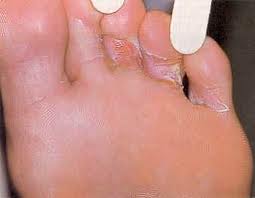
        Fungi can be helpful: we use yeast to make bread, beer and wine and mould to make antibiotics. they can also be harmful; fungi cause athlete's foot and ringworm.

          Harmful microorganisms

           Microorganisms that cause diseases are often called germs.


          Some diseases, like chickenpox, are caused by viruses. Diseases caused by viruses usually spread easily from one person to another.


          Uncooked foods (especially meat) can contain bacteria. The bacteria are killed when the food is cooked properly. But if you eat food that has not been cooked properly, the bacteria may survive and make you feel very ill.


          Mould is a type of microorganism that grows on decaying food. It can make you ill if you eat it.


          fungi cause athlete's foot 


          fungi also cause ringworm.


          How to avoid spreading harmful microorganisms

          You can avoid spreading harmful microorganisms by: